
Where did the word "limousine" come from?
The word limousine has two competing origin stories, and both are probably true. The first traces the name to the Limousin region of central France, a rural province known for sheep farming. Shepherds in Limousin wore a distinctive hooded cloak for protection against the weather. When early enclosed carriages appeared in France with covered compartments that separated driver from passenger, the resemblance to the shepherd's cloak was noted, and the vehicle was named after the region.
The second origin story focuses on the driver's covered seat specifically. Early automobiles were entirely open. When manufacturers began adding a covered roof over the driver's position, the covered section again resembled the Limousin shepherd's cloak. Either way, the region of France gave the limousine its name, and the covered separation between driver and passenger became the defining feature of the limousine concept that survives in every chauffeur-driven vehicle to this day, including the fleet at Beltway Limousines in Arlington, VA.
In 1916, the Society of Automobile Engineers formally defined a limousine as "a closed car seating three to five people, with the driver's seat outside." That separation between driver and passenger, established in the earliest horse-drawn carriages of the 18th century, is still the defining characteristic of every professional limousine service operating in Washington DC today.
The earliest limousines: Horse-drawn carriages 1700s to 1900s
Before automobiles, the limousine concept existed as a specific style of horse-drawn carriage. Wealthy families in Europe and North America used enclosed, elongated carriages to travel in comfort and privacy. The driver sat in an exposed position at the front. Passengers occupied a sealed, weather-protected compartment in the rear, often upholstered with silk, velvet, and leather.
These carriages were not called limousines consistently, but the design principles were identical. The enclosed passenger compartment, the separate driver position, the emphasis on passenger comfort over driver comfort, and the association with wealth and status were all present in 18th-century horse-drawn carriages long before the automobile was invented.
As carriage technology improved through the 1800s, the gap between everyday transport and luxury carriage widened. By the 1890s, wealthy households in cities like Washington DC, New York, and London employed full-time coachmen to drive their carriages. The coachman was the forerunner of the chauffeur.
The automobile era begins: 1900 to 1920s
The first automobile limousine appeared in 1902. As motor vehicles replaced horse-drawn carriages among the wealthy, manufacturers quickly recognized the demand for the same enclosed, passenger-privacy design that had defined luxury carriages. The solution was straightforward: extend the chassis of existing car models, add an enclosed passenger compartment with a glass partition, and leave the driver in a separate, often uncovered section.
This design, the direct descendant of the horse-drawn carriage, became the standard limousine configuration. Early models were built by Cadillac, Packard, and Pierce-Arrow in the United States and by Mercedes-Benz, Rolls-Royce, and Renault in Europe. The vehicles were exclusively for the wealthy. A limousine in 1910 cost several times the annual salary of an average worker.
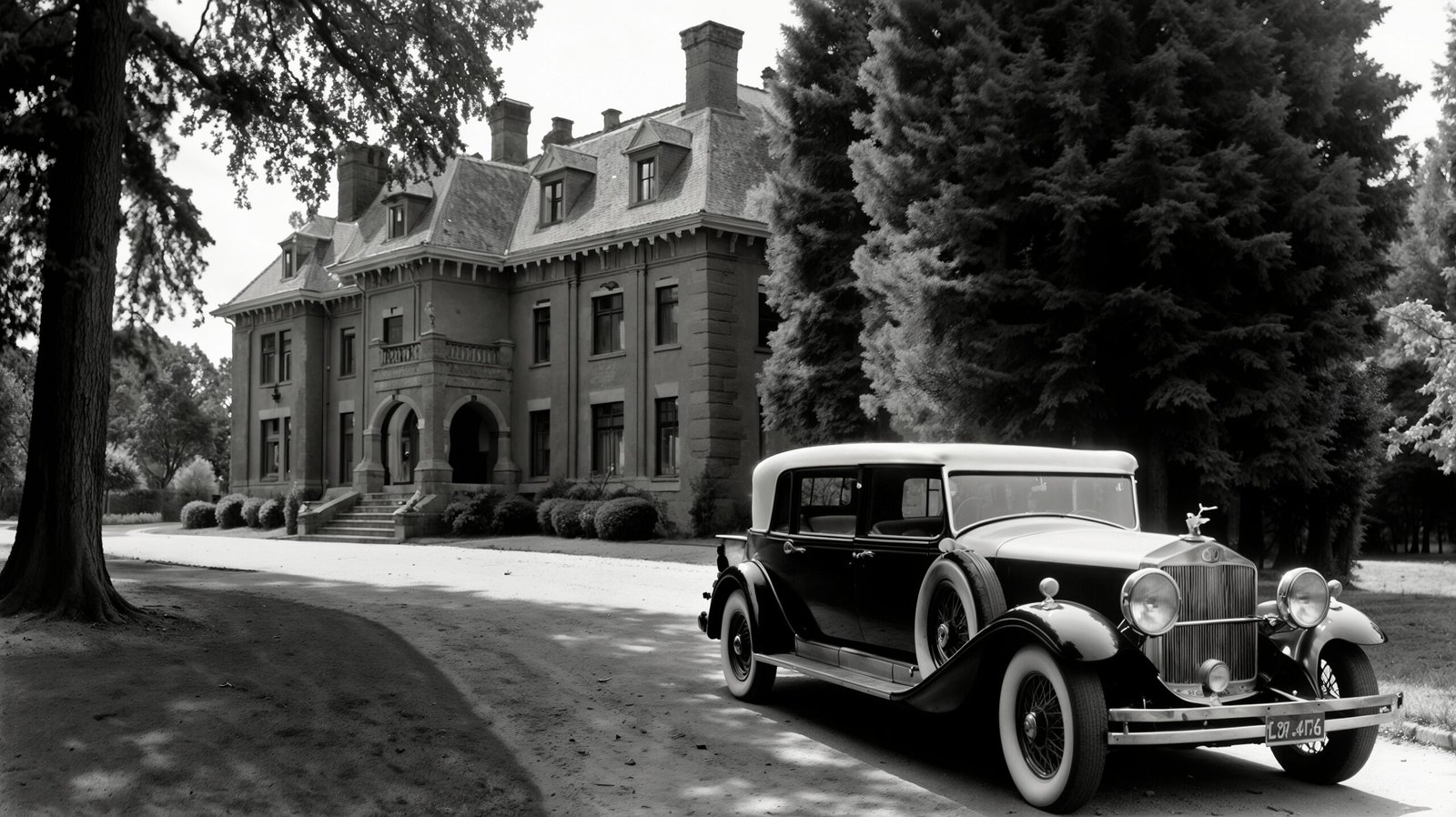
Washington DC was particularly active in limousine adoption during this period. The city's concentration of government officials, foreign diplomats, and wealthy business figures created consistent demand for private, enclosed, chauffeur-driven transportation. By the early 1920s, it was standard practice for senior government officials and foreign embassy staff to travel by limousine.
DC connection: The White House began using official limousines for presidential transport in the early 1900s. The connection between Washington DC, political power, and the limousine was established from the very beginning of the automobile era.
The stretch limousine is born: 1928
The stretch limousine was invented in 1928 by the Armbruster company in Fort Smith, Arkansas. The purpose was straightforward: big band musicians traveling between performances needed to transport the entire band, their instruments, and their luggage in a single vehicle. Armbruster's solution was to take a standard limousine chassis and extend it significantly, creating what became known at the time as a "big band bus."
The first stretch limousines were not luxury vehicles in the modern sense. They were working transport for musicians. But the design, a dramatically elongated vehicle with vastly increased interior space, attracted attention far beyond the music industry. By the early 1930s, stretch limousines were being ordered by hotel chains to transport guests, by funeral homes for processions, and by wealthy individuals who wanted the maximum possible statement of luxury and status.
Presidential limousines and Washington DC
No city has a deeper relationship with the limousine than Washington DC. The White House has used official limousines for presidential transport for over a century, and the vehicles used by US presidents represent the most technically advanced and security-hardened limousines ever built.
Franklin D. Roosevelt's Sunshine Special, a 1939 Lincoln V12 converted by Hess and Eisenhardt, was the first purpose-built presidential limousine. The car weighed over 9,000 pounds when fully fitted with security modifications. Roosevelt used it throughout World War II.
John F. Kennedy was assassinated in a presidential limousine in Dallas in 1963, a 1961 Lincoln Continental that was subsequently modified and used by subsequent presidents until 1977. The event fundamentally changed presidential vehicle security requirements and led to the armored, bomb-resistant, communications-equipped vehicles used today.
The current presidential state car, informally called The Beast, is a Cadillac-based vehicle custom-built by General Motors. It weighs approximately 20,000 pounds, has doors 8 inches thick, and contains enough supplies and communications equipment to operate as a mobile command center. It is serviced and based in Washington DC at all times when not in use.
Beyond the White House, Washington DC's concentration of embassies, government agencies, military leadership, and corporate headquarters means the city has always been one of the most active limousine markets in the United States. Professional limousine services based in DC and Arlington — including Beltway's corporate chauffeur service — have served this demand for over a century.
The limousine manufacturers: Who built the most famous vehicles?
Limousine manufacturing has always been a specialized business. Unlike standard passenger vehicles, limousines were typically built by coachbuilding companies that modified standard chassis from major manufacturers.
- Cadillac — Associated with American presidential and government limousines since the 1920s. The current presidential state car is Cadillac-based. General Motors has supplied presidential vehicles more than any other manufacturer.
- Lincoln — The most recognizable name in American commercial limousines. The Lincoln Continental was the standard presidential limousine from the 1960s through the 1970s. Lincoln Town Car became the standard commercial limousine in the 1980s and 1990s.
- Mercedes-Benz — The standard for European diplomatic limousines. Mercedes Sprinter vans have become the dominant group limousine vehicle in professional fleets, including Dulles airport transfers and corporate groups.
- Rolls-Royce — The ultimate luxury limousine for private clients. Used extensively by British royalty and heads of state. Not typically found in commercial limousine fleets due to cost.
- Chrysler — Produced the 300 stretch limousine widely used in commercial fleets during the 1990s and 2000s. Associated with prom, prom limo service DC, weddings, and event transportation.
- Armbruster and Stageway — The coachbuilding companies responsible for most of the stretch limousine conversions used commercially in the US.
Limousines in popular culture and Hollywood
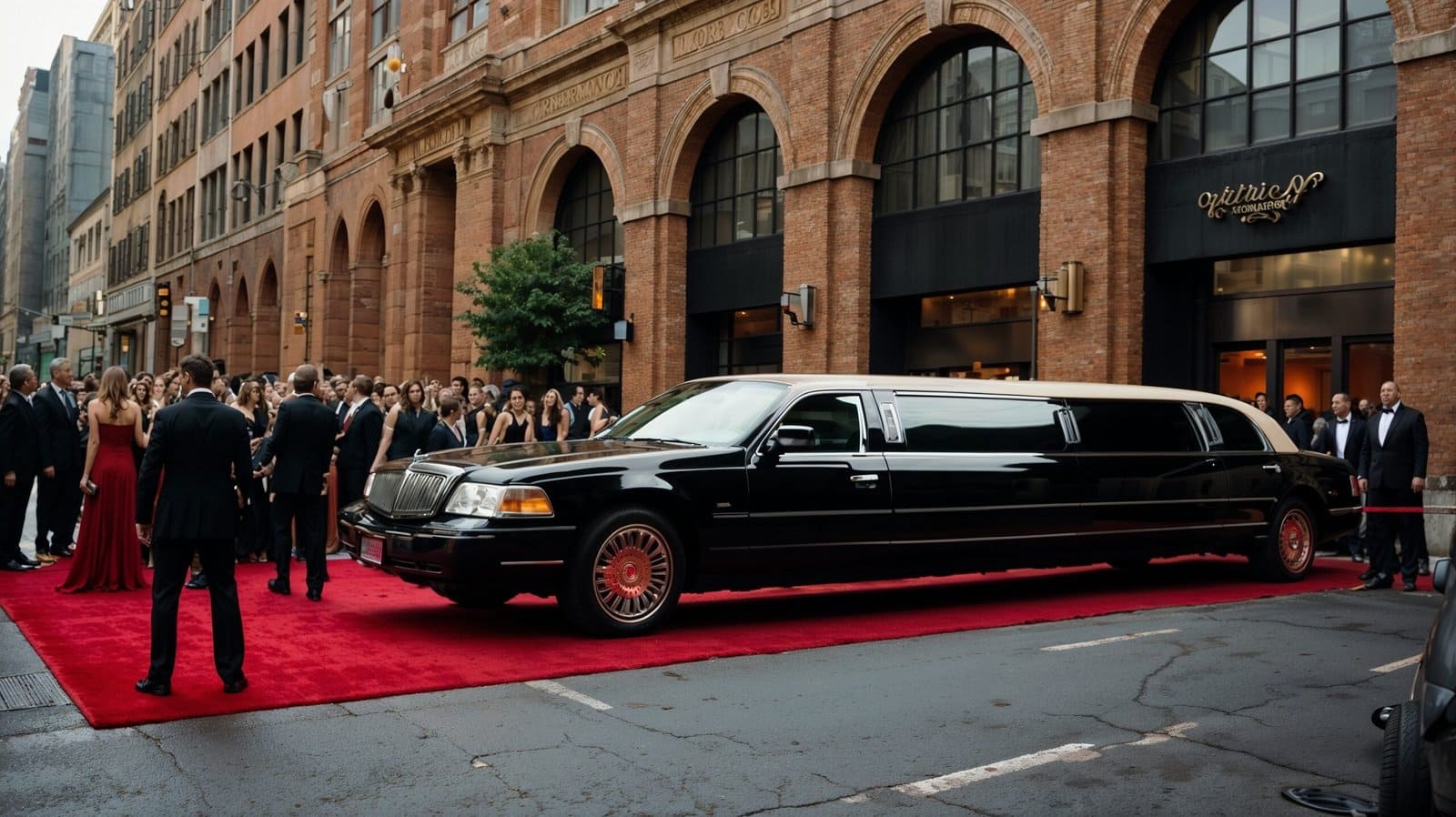
The limousine's association with celebrity culture was established early and has never weakened. Hollywood studios began using limousines to transport stars to premieres in the 1920s, and the image of a star stepping out of a long black car became one of the defining images of American celebrity culture.
The 1980s saw the cultural peak of the stretch limousine. Prom nights, birthdays, bachelorette parties, and sporting events all adopted the stretch limo as the vehicle of choice for celebrations. Today in Washington DC, the black car service and discreet SUV has replaced the stretch limo for most government and corporate travel, while stretch vehicles remain popular for wedding limousines and special events.
The modern limousine fleet: What is used today
The limousine industry has changed more in the last 20 years than in the previous 80. The stretch limousine, while still available for events and celebrations, has given way to a diversified fleet of professional vehicles suited to different purposes.
In Washington DC and Arlington, the Beltway Limousines fleet represents exactly how modern professional limousine service works. The fleet covers every purpose from solo airport transfers to 55-passenger group transportation.
The black SUV has become the dominant professional vehicle because it offers the privacy and comfort of a traditional limousine without the size or visibility of a stretch vehicle. It is the vehicle of choice for airport transfers to DCA, IAD, and BWI, for corporate chauffeur service across DC's K Street and Capitol Hill corridors, and for diplomatic and government transport. For executive clients in McLean VA — home to the CIA and Tysons corridor — the black SUV is standard.
Limousine service in Washington DC today
Washington DC remains one of the most active limousine markets in the United States for the same reasons it has always been. The concentration of government agencies, foreign embassies, defense contractors, law firms, and corporate headquarters creates consistent demand for professional ground transportation at every level.
Reagan National Airport alone handles over 25 million passengers annually. The three major airports serving DC, DCA, IAD at Dulles, and BWI in Maryland, collectively handle some of the heaviest business travel traffic in the country.
Beltway Limousines operates from 3400 Potomac Ave, Arlington, VA (USDOT #4281564), positioned between Reagan National Airport to the south, the Pentagon to the east, and the downtown DC corporate corridors to the north. For DC residents and visitors, booking a professional limousine service today is simpler than it has ever been. See our full pricing guide for current rates, or use the instant quote form for a confirmed rate in under 60 seconds.
From 1902 to today: The fundamental limousine concept — a separate driver from a comfortable, private passenger compartment — has not changed in 120 years. In Washington DC, professional limousine service is used daily by airport travelers, corporate executives, Pentagon contractors, foreign diplomats, wedding parties, and residents who want reliable, surge-free ground transportation.